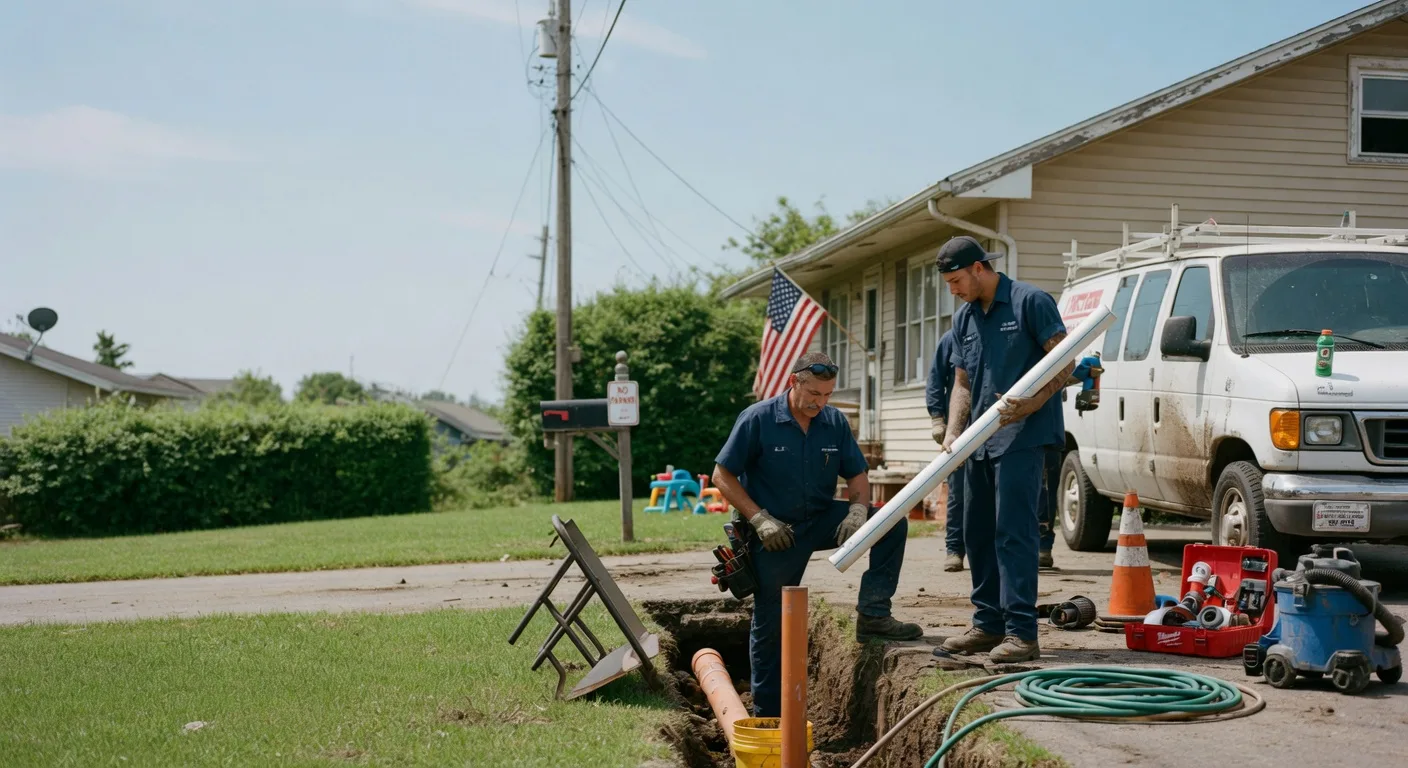
Does a garbage disposal cause drain clogs?
Your kitchen sink is slow and there is a disposal under it, so you suspect the disposal. It can contribute, but the disposal itself is rarely the clog. It chops food into small pieces. It does not make that food disappear, and the pieces still have to travel down the pipe.
Ground scraps mix with grease and settle as grease build-up on the pipe wall, in the trap and in the horizontal run past it. Potato peels, rice, pasta, coffee grounds and fibrous stalks make it worse.
Safe homeowner checks: run cold water and listen for a hum, which means the disposal is jammed. Switch it off at the wall before anything else, and never put a hand inside. See whether the other side of a double sink fills, and whether the dishwasher drains.
Stop running water and call if other fixtures gurgle or back up, if you smell sewage, or if standing water does not drop for hours. One slow kitchen sink points to the branch line. Several fixtures affected points to the main line or a blocked vent stack.
A cable machine is usually enough for a soft clog near the trap. Heavy grease along a longer run calls for hydro jetting. A clog that returns calls for a camera inspection, to look for a bellied line.
Cost depends on access, how long the line is, and what has to be removed. For Drain Cleaning help, call (380) 262-9173. Expert Plumbers Co is a referral service and will refer you to a plumber serving North Monmouth, ME.
If you do keep a disposal, a few habits cut down on repeat clogs. Run a strong flow of cold water for about half a minute after each use, so the ground waste is carried past the trap and into the larger line instead of settling in the horizontal run. Scrape greasy pans into the trash first, and wipe them with a paper towel before they reach the sink. Citrus peel and ice do nothing for the pipe, so skip the habit of relying on them to clean it. Never use the disposal as a trash can for egg shells, bones, onion skins or artichoke leaves. Tell the plumber how old the unit is and whether the dishwasher drain hose connects to it, because a blocked disposal inlet can back dishwasher water into the machine. In older homes the kitchen line is often a long, shallow-sloped run, which is why grease collects there so easily.
Are flushable wipes really a problem for drain lines?
You flush a wipe that says flushable, and a week later the toilet is slow or the whole line gurgles. Yes, they are a problem.
Toilet paper falls apart in water within minutes. Wipes are woven fibre and hold together. They travel down, then catch on a rough spot: a clay joint, a root hair, a bend, or a coat of grease on the pipe wall. The next wipe snags on that one. Over weeks they twist into a rope that traps paper and everything else behind it.
Signs to watch for: a slow toilet, gurgling from a tub or sink when you flush, or a clog that keeps returning a few weeks after it is cleared.
Safe homeowner check: stop flushing wipes and try a plunger on the one toilet. Do not keep flushing to see if it clears. If water is rising toward the rim, stop and wait.
Stop running water and call now if more than one drain is backing up, or if sewage shows in a floor drain or tub. That points to the main line, not the toilet.
A cable machine often pulls a wipe mass out of a single branch. A packed main line, or one with grease or roots in it, may need hydro jetting, and a camera shows which. Cost depends on access, how far down the line the blockage sits, and how much has to be opened. Expert Plumbers Co is a referral service. Call (380) 262-9173 for Emergency Drain Cleaning referrals in North Monmouth, ME.
To stop it coming back, give the plumber the full history of what has gone down the toilet, including the brand of wipe and how often. Many packages say flushable, but that is a label, not a test the pipe has to pass. Keep a small covered bin next to the toilet so the habit is easy to change, and tell everyone in the house, including guests and children. If a wipe mass has been pulled out of the line, ask to see it, because its size gives a rough idea of how much is still lodged further along. In older homes with clay or cast iron, rough joints and scale make the pipe catch wipes far sooner than smooth plastic pipe does, so a line that took them for years can suddenly start clogging. After the line is cleared, a slow toilet that stays slow suggests another cause.
We run a cafe and the kitchen line keeps blocking. Is that the same job as a house drain?
Not quite. A kitchen line that blocks again and again is usually a grease problem, and that is a different job from a house drain.
A cafe pushes far more fat, oil and food solids down the pipe than a home does. The grease cools, sticks to the pipe wall and builds layer on layer. The opening shrinks each week. That is why the blockage returns on a short cycle.
A grease interceptor, also called a grease trap, sits between the kitchen and the main line. It catches fat before it travels downstream. It only works while it has room. Once it is overfull it stops holding grease and passes it straight into the line. So it needs servicing on a schedule, not just when something goes wrong. Many jurisdictions require an interceptor and expect records of each servicing. That is a code matter, so check with your local authority.
A cable machine punches a channel through the grease and leaves the coating on the wall. Water drains for a while, then the channel closes again. A commercial line usually needs hydro jetting, which uses high-pressure water to strip the wall clean. A camera inspection then checks the pipe underneath for cracks, roots or a sag that holds water.
One slow sink is a branch problem. Every fixture backing up points to the main line.
A blocked line in a food business is a shutdown risk, so timing matters. If water is rising near the prep area, stop using the sinks and call.
What the job involves depends on access to the line, how much has to be opened up, the condition of the pipe and any permit requirement. Expert Plumbers Co is a referral service. Call (380) 262-9173 and we will refer your cafe to an independent local plumber in North Monmouth, ME.
Keep a servicing record and a routine. Write down the date each interceptor is serviced and by whom. Authorities that require interceptors usually ask to see those records.
Train kitchen staff on what goes down the drain. Scrape plates and pans into the trash first, fit fine mesh strainers in every sink, and never pour fryer oil down any drain, even with hot water, because it cools further down the line and sets. Hot water and soap only move grease along the pipe. They do not remove it.
Learn the warning signs of a full interceptor: slow draining at the sinks nearest it, a sour or rancid smell, or grease showing in the outlet chamber.
Set the jetting interval after a camera inspection shows how fast the coating builds, so cleaning happens before a lunch rush is lost to a backup. Mention any recent menu change toward fried or fatty food when you call.
Does drain cleaning or sewer line repair need a permit?
You need a drain cleared or a sewer line fixed, and you want to know whether the work needs a permit before anyone starts. The answer depends on what is being done.
Drain cleaning usually needs no permit. Clearing a blockage with a cable machine, running a hydro jet, or putting a camera in the line does not change the plumbing system, so most areas treat it as maintenance.
Repair or replacement of a building sewer usually does need one. The building sewer is the pipe from the house to the main in the street. Fixing a collapsed section, replacing a root-damaged clay line, or digging out a bellied run changes the system, so it is normally permitted and inspected. If the dig reaches the street, curb or public right of way, a separate permit may be needed. Rules vary by area, so check with your local building or public works office, or ask the plumber what applies in North Monmouth, ME.
The cause points the way. Root intrusion at a clay joint, grease build-up on the pipe wall, scale in cast iron or a blocked vent stack are usually cleaning jobs. A failed sewer lateral, a bellied line that holds water, or a broken pipe is a repair, and that is where permits come in.
One slow fixture rarely leads to a permit question. If every drain in the house is backing up, the main line is involved, and a camera inspection will show whether cleaning will do or a repair is needed.
Safe homeowner check: Find your cleanout and note where it is. Find out where your property line sits, since that affects who is responsible for which part of the line. Call your local building department and ask what work needs a permit.
Stop running water and call now if sewage is coming up inside, if the yard is wet or sunken over the line, or if you smell sewage. Safety comes before paperwork.
A cable machine is enough for a soft clog. Hydro jetting is the next step for grease or scale. A camera inspection shows whether a repair is needed, and that finding is usually what leads to a permit.
Expert Plumbers Co is a referral service. We connect you with an independent local plumber in North Monmouth, ME. Call (380) 262-9173.
Ask the plumber who handles the permit, whether an inspection is required, and how that affects the schedule. The scope depends on how much of the line has to be opened up, access, parts and materials, any right-of-way work, and the code requirements in your area.
We wash the dog or muddy gear in the tub or laundry sink. Can sand and mud clog the line?
Washing the dog in the tub feels harmless. The water runs away, the bathroom smells of wet fur, and an hour later the tub drains slowly. Muddy boots, gardening gear and sports kit in the laundry sink do the same thing over time. Yes, sand and mud can clog a line.
The problem is how they travel. Water carries sand and grit along, but only while it is moving fast. In a trap, a flat run or a low spot in the pipe, the flow slows and the grit drops out. It settles, packs down and mixes with pet hair, soap and grease to form a dense sludge. Each wash adds a little more. Eventually the pipe is narrow enough that normal use overflows it at peak load.
Hair and grit also catch on any rough spot, such as scale in cast iron or a root mat at a clay joint, and a bellied line holds the settled material in place. It does not flush away on its own.
The key question is where it is happening. If only the tub or laundry sink drains slowly, the clog is likely in that fixture's trap or branch line. If the toilets gurgle and other drains back up as well, the sludge has moved into the main.
Safe homeowner check: stop washing pets or gear in the tub and laundry sink for now. Fit a fine hair catcher over the drain. Use a bucket and the yard hose for muddy boots and dog baths outside when weather allows. Do not pour chemical drain cleaners into a line with packed sand, since they do not dissolve it.
Stop running water and call now if sewage or gray water is coming up in a tub or floor drain, if the drain is overflowing, or if you smell sewage. Do not keep running the washer while the line is backed up.
A cable machine can open a path through packed sludge, but it often leaves settled sand behind, so the drain slows again. Hydro jetting flushes the sand and mud out of the line. If the trouble keeps returning, a camera inspection shows whether a belly, root intrusion or damaged joint is trapping it.
Expert Plumbers Co is a referral service. We connect you with an independent local plumber in North Monmouth, ME. Call (380) 262-9173.
Tell the plumber exactly what goes down the drain, including pet washing. Ask whether the trap was cleaned and whether the main was jetted or only cabled. Scope depends on access, how far the buildup extends, whether a section has to be opened up, and any permit or code requirement for repairs. A cleanout near the fixtures makes future service simpler.